Industrial Mastery Pathway
Emergency Response and First Aid Basics
Securing Life through Clinical Sequence and Response
The Lead Engineer's Briefing
Welcome to the final technical checkpoint of your foundational safety training. This course focuses on the immediate response required when our safe systems fail and an incident occurs. While we strive for Zero Harm, every qualified professional must be ready to act with clinical precision during an emergency. This module bridges the gap between reporting a hazard and taking physical action to save lives.
In our industry, emergency response is governed by statutory First Aid and Fire Safety regulations. You are not expected to be a doctor, but you must be a competent first-responder who can assess danger, raise the alarm, and provide basic life support. This role is a vital link in our Golden Thread, ensuring that safety persists even in the chaos of an incident.
Professionalism is most visible during an emergency. The ability to follow a pre-defined sequence under pressure is what distinguishes a qualified worker from an untrained one.
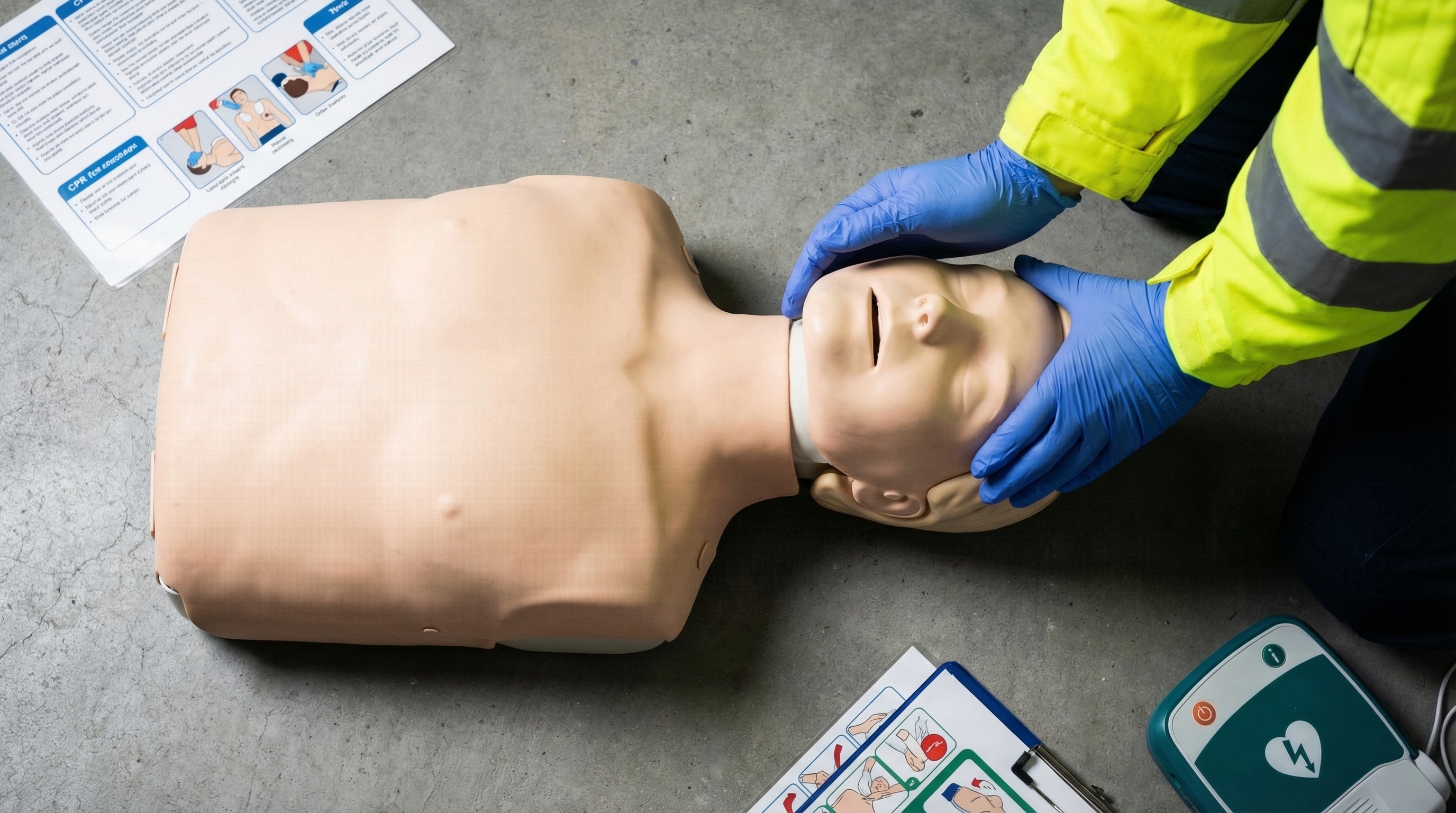
You will master the Primary Survey (DRABC) and learn to navigate complex site layouts during an evacuation. You will also learn how to provide emergency services with the precise level of detail they need to reach a casualty quickly. By the end of this course, you will be prepared to lead others to safety and protect those in need.
Node Parameters
Authorisation Cost
£10
Inclusion & Accessibility
Engineered for total accessibility. We provide full screen-reader compatibility and high-contrast visual modes.
Support: support@ikigaixr.com
System Configuration
Instructional Objectives
- Emergency Signals. Recognise the technical difference between fire, chemical, and evacuation alarms used in this workplace.
- Primary Survey. Execute the clinical DRABC sequence to assess casualties for danger, response, airway, breathing, and circulation.
- Assembly Protocols. Identify muster points and understand the professional requirements for a successful site roll-call.
- Emergency Comms. Standardise the 999 call sequence to provide precise location and casualty data to operators.
- Life Support Tools. Understand the location and automated logic of Automated External Defibrillators (AEDs) on site.
The Critical Logic of Safety
The Cost of Confusion
In a previous industrial incident, several workers were injured because they failed to recognise a specific chemical alarm. Instead of moving to the safe upwind assembly point, they walked directly into the path of a toxic vapour cloud.
The Golden Thread: Technical knowledge of site signals and assembly rules is a survival requirement. We train so that every worker knows exactly where to go when the siren sounds.